
What SEO Means
Search engines process billions of searches every day across traditional search results, AI-generated answers, featured snippets, local listings, videos, and shopping experiences. Their mission remains consistent: to deliver the most relevant, accurate, and useful answers to users as quickly as possible.
Search Engine Optimization (SEO) is the practice of improving a website’s visibility, credibility, and user experience so that search engines can confidently present its content as the best possible answer to a given query. For organizations newer to the discipline, this concept is explored more fully in What Is SEO?
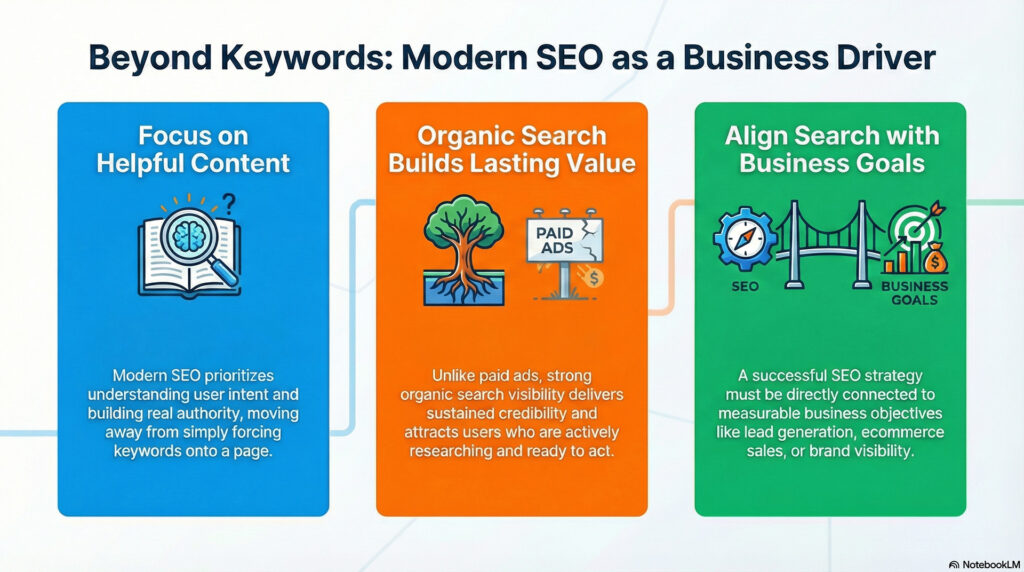
Modern SEO is no longer about exploiting algorithm loopholes or forcing keywords into pages. Instead, it focuses on understanding user intent, producing genuinely helpful content, maintaining strong technical performance, and building real authority within an industry. This holistic approach is at the core of Nowspeed’s SEO services.
The Role of Organic Search
Organic search results represent unpaid listings that search engines surface because they believe the content is relevant and trustworthy. While paid advertising offers immediate visibility, organic search delivers sustained value by building credibility and long-term equity.
High-performing organic search programs attract users with strong intent—people actively researching, comparing options, or preparing to make decisions. Over time, this visibility compounds as content matures, authority grows, and brand recognition increases. SEO therefore plays a critical role across the full buyer journey, from awareness through conversion.
An effective SEO program connects visibility directly to measurable business outcomes. Rankings alone are not enough; success comes from earning clicks, engaging visitors, and guiding them toward meaningful actions.
SEO Goals: Aligning Search with Business Objectives
Every successful SEO strategy begins with a clear understanding of business goals. Before selecting keywords or creating content, it is critical to define whether the primary objective is lead generation, e-commerce sales, brand visibility, product adoption, or market expansion.
SEO delivers meaningful impact when it is aligned with revenue goals, pipeline targets, brand positioning, and conversion optimization strategy. This alignment ensures SEO supports broader marketing and sales initiatives rather than operating in isolation.
Websites must also be designed to capture and convert organic traffic. Clear messaging, logical navigation, persuasive calls to action, and reliable tracking are essential. These elements are often addressed in parallel through website design and conversion optimization initiatives such as those offered by Nowspeed.
How Search Engines Rank Content
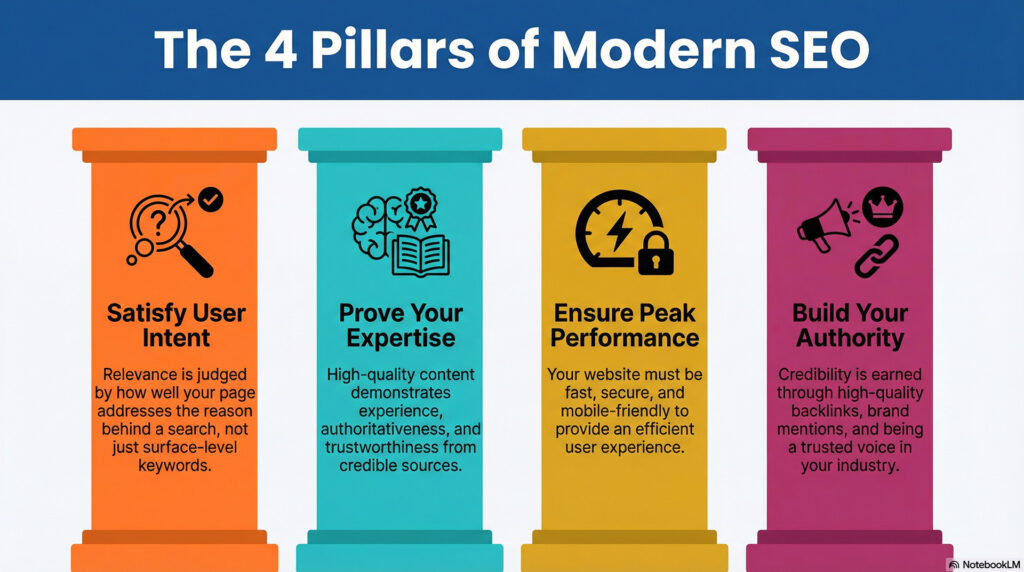
Search engines use hundreds of signals to determine which content deserves visibility, but those signals generally fall into four core areas: relevance, content quality, technical performance, and authority.
Relevance is driven by how well a page satisfies the intent behind a search query. Search engines evaluate whether content aligns with the context of the search, including informational, commercial, transactional, and navigational intent. Pages that clearly and completely address intent consistently outperform those that rely on surface-level keyword usage.
Content quality is evaluated through experience, expertise, authoritativeness, and trustworthiness. Search engines look for evidence that content is created by knowledgeable sources with real-world experience and credible backing. Clear authorship, accurate information, and strong brand signals all contribute to long-term trust.
Technical performance ensures that content can be accessed, understood, and delivered efficiently. Search engines prioritize websites that load quickly, function well on mobile devices, use secure connections, and follow best practices for crawlability and indexation.
Authority reflects how credible and trustworthy a website appears within its industry. This credibility is earned through high-quality backlinks, brand mentions, digital PR, and consistent topical relevance rather than sheer link volume.
Keyword and Topic Research in a Modern SEO Strategy
Keyword research has evolved into topic research. Rather than optimizing for isolated search terms, effective SEO strategies focus on understanding how users explore broader subjects and how those subjects align with business offerings.
This process begins with identifying core themes relevant to your products or services and then analyzing how potential customers search, compare options, and make decisions within those areas. Advanced planning techniques are explored further in SEO Strategy: Advanced Tips and Techniques to Fuel Your Website.
The most valuable keywords are not always those with the highest search volume, but those that attract users most likely to convert. Topic-focused strategies allow a single page to rank for dozens or even hundreds of related queries by covering a subject comprehensively.
Keyword and Topic Mapping
Once topics have been identified, they must be mapped intentionally across the website. Each important page should serve a clear purpose, target a specific intent, and fit logically within the site’s overall structure.
Keyword and topic mapping involves optimizing page-level elements such as URLs, title tags, meta descriptions, headings, body content, internal links, and supporting media. Internal linking plays a particularly important role in reinforcing topical relationships and signaling page importance to search engines. This is explored in depth in The Art of Internal Linking: Elevating Your SEO Strategy.
Technical SEO Foundations
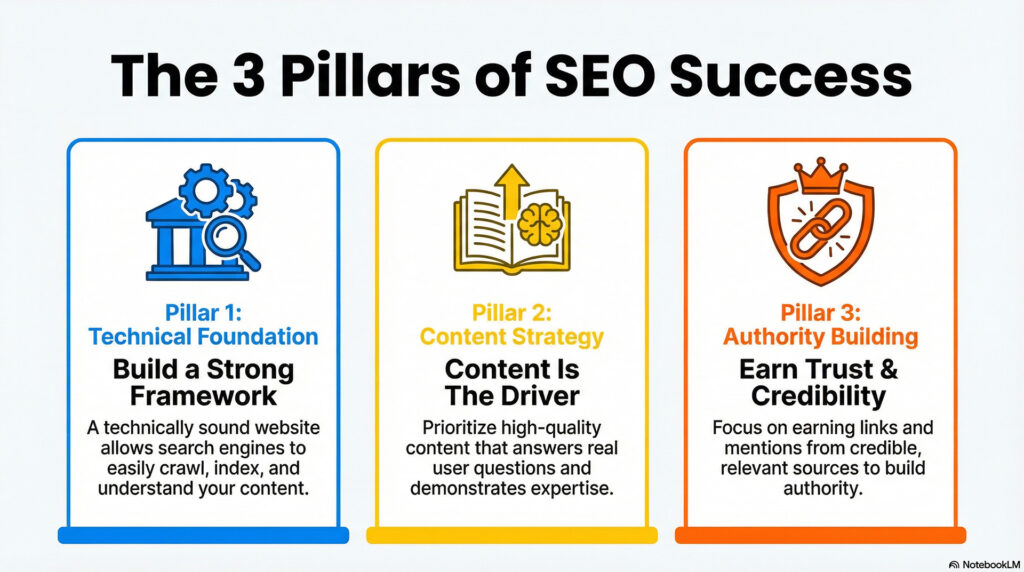
Technical SEO provides the framework that allows search engines to crawl, index, and rank content effectively. A well-structured site improves both visibility and usability while reducing friction for users and search engines alike.
Core technical considerations include crawlability, index management, duplicate content control, canonicalization, mobile performance, page speed, and Core Web Vitals. Regular technical evaluations are essential, and the importance of this work is detailed in The Power of a Website Audit: Fueling Your SEO Strategy.
This type of work is typically delivered as part of ongoing SEO and technical optimization services such as those provided by Nowspeed.
Content Strategy and Optimization
Content remains the primary driver of SEO performance, but quality consistently outweighs quantity. Effective SEO content is designed to answer real questions, demonstrate expertise, and guide users through the buying journey.
High-performing SEO programs rely on a mix of educational resources, service and product pages, case studies, FAQs, and multimedia assets. Content strategy and creation often overlaps with broader content marketing initiatives such as those offered by Nowspeed.
Refreshing and improving existing content frequently produces faster and more reliable results than publishing new pages, particularly when content decay or outdated information is holding back performance.
Link Building and Authority Development
Modern link building focuses on earning trust rather than manipulating rankings. Search engines reward links that come from credible, relevant sources and are placed within meaningful editorial contexts.
Authority is most effectively built through thought leadership, digital PR, partnerships, original research, and content that naturally attracts attention. Brand mentions, whether linked or unlinked, increasingly contribute to perceived credibility. Internal linking remains equally important, reinforcing topical authority and improving navigation.
SEO Reporting and Measurement
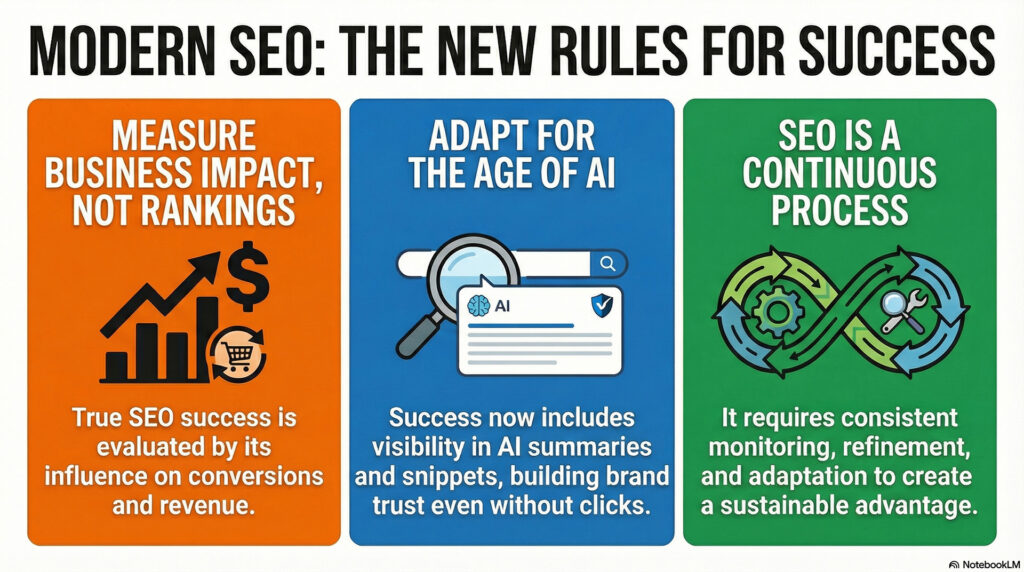
SEO performance must be evaluated through its impact on business results, not rankings alone. Visibility metrics provide helpful context, but they represent only the beginning of the performance story.
Meaningful SEO reporting connects visibility to clicks, engagement, conversions, and revenue influence. Tools such as Google Search Console and Google Analytics allow organizations to track how users discover content and progress toward conversion. A real-world example of this approach is outlined in SEO Results: A Company’s Journey from Zero to #1 Keyword Rankings.
SEO in the Age of AI and Zero-Click Search
Search results increasingly feature AI-generated summaries, featured snippets, and knowledge panels that reduce the need for traditional clicks. As a result, SEO success now includes visibility even when users remain on the search results page.
This shift is explored further in SEO in an AI World: How Marketers Can Adapt and Thrive with GEO and SEO vs. GEO: Key Differences and What Your Business Needs to Do to Win in AI Search.
Even when users do not click immediately, strong search visibility builds trust, brand recognition, and future demand.
SEO as a Continuous Discipline
SEO is not a one-time project. It is an ongoing process that requires consistent monitoring, refinement, and adaptation. Search behavior, algorithms, and competitive landscapes continue to evolve, and successful SEO strategies evolve alongside them.
Organizations that invest in continuous analysis, content improvement, technical optimization, and authority building create a sustainable advantage in search. Over time, these efforts compound, delivering durable visibility, steady traffic growth, and long-term business impact.
Final Perspective
Today, SEO is no longer about ranking individual pages. It is about earning attention, trust, and relevance wherever search happens. When approached strategically, SEO becomes one of the most powerful and enduring drivers of digital growth.

Need Help Improving Your Digital Marketing?
Need Help Improving Your Digital Marketing?